Blog

November 2026

NATHANIEL HARRIS EST

Day 34: Arwing R&D

I've been using the original Arwing model from Star Fox SNES for Star Fox Battle up to this point. But with the release coming soon, it was time that I model a brand new Arwing. It looks very close to the original. I also made a lower polygon model that cuts the triangles from 15 to just 8 that the renderer switches to for far away ships. I've yet to notice the transition between them when playing, so I think I did a good job with it!
NATHANIEL HARRIS EST

Day 33: A match with Star Fox

Star Fox Battle for SNES in action! It is nearing completion for an alpha release, hopefully by Thanksgiving morning. Here we have me fighting in a free-for-all against 3 CPU players. The level here is Katina, which on in Star Fox 64 was exclusive to Time Trial mode. Being able to fight computer players also wasn't an option, but it is here!

NATHANIEL HARRIS EST

Day 32: Star Fox Battle

Here's a little side project I've been working on, Star Fox Battle for the SNES! It is based on the Star Fox 64 versus mode with the aesthetics of the SNES Star Fox games. For years I have wanted to test some engine ideas I had to make a 3D 4-player split-screen game possible on the SNES, and now I have finally done it. Most of the game's features are completed. At the current rate it will be ready for release very soon!

NATHANIEL HARRIS EST

Day 32: Star Fox Battle

Here's a little side project I've been working on, Star Fox Battle for the SNES! It is based on the Star Fox 64 versus mode. I always wanted to test some engine ideas I had to make a 4-player split-screen game possible on the SNES. Most of the game's features are completed, and at the current rate it will be ready for release very soon!

NATHANIEL HARRIS EST

Day 28: It looked fine on emulator!

A clear demonstration of why you test on hardware. I converted Steamboat Willie as another test of my video playback, and there's noticeable flickering on a CRT. While playing old black & white cartoons isn't my intended use for my video driver, it does show that I need to add some tools to the converter to help eliminate flickering. Perhaps applying an S curve to luma might reduce gray pixel dithering so the flickering is reduced.

NATHANIEL HARRIS EST

Day 27: Dithering

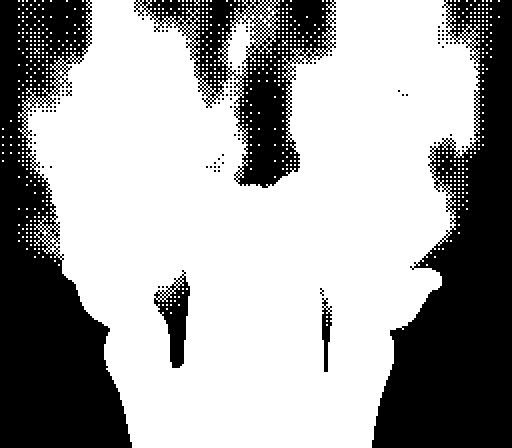
When I opted to make the Bad Apple playable on SNES CD, I had misremembered the video as being just blacks and whites. However, it includes a fair bit of grays so I needed to convert those. My driver works with 1 bit per pixel video, so pixels could only be either white or black. I either needed to clamp to white or black or dither the pixels. Clamping lead to some elements not showing up at all, while dithering made the characters fuzzy. I settled on dithering based on brightness when there weren't enough fully white pixels nearby, otherwise it clamps to black or white. It took a lot of fine tuning but I think the end result ended up great.

NATHANIEL HARRIS EST

Day 26: MSU-1 to CD-ROM

The next major step is making sure my CD development tools are working, and porting the Bad Apple video to it to test on no$sns. Reading from CD is a bit more complicated than MSU-1. MSU-1 skips a lot of troubles with working with CD-ROM. MSU-1 doesn't have to wait for laser repositioning it needs to seek, MSU-1 doesn't have errors it needs to check for, and MSU-1 reads data much faster than a 1x speed CD-ROM. The MSU-1 test ROM can read the uncompressed graphics data and upload it to VRAM with tons of time to spare, but there's not enough time for a 1x speed CD-ROM to retrieve enough bytes for that. So some amount of compression will be needed.

NATHANIEL HARRIS EST

Day 25: Rule 86

"If it exists, it can play Bad Apple"

It already exists for the SNES, but not the SNES CD / Nintendo PlayStation. I want to test my new CD development tools and opted to make this as a quick way to test them, as well as my custom BIOS. My version runs at 30 FPS with ease while the existing version caps at 20 FPS. It took a while to fine tune the converter, but now I have a basic MSU-1 build that can run on emulator and SD2SNES / FXPak. Next step is getting it to run off CD-ROM at 1x speed, which will be a little more trickier than MSU-1.

Here it is running on my SD2SNES. On a CRT the stars' and petals' pixels bleed into other pixels a little making colorful shimmers, but sadly my camera doesn't pick it up well.

NATHANIEL HARRIS EST

Day 24: Populating the world

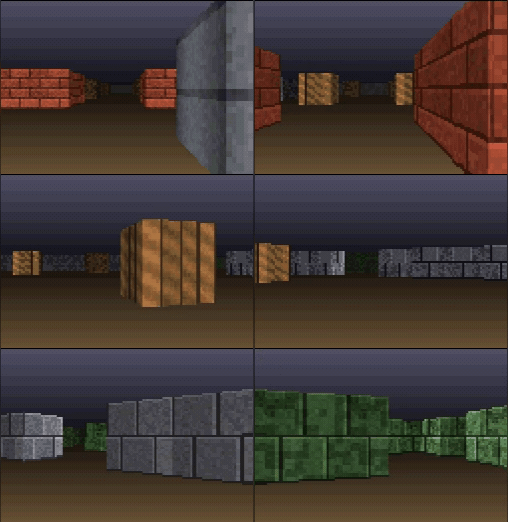
Objects are now working, with a variety of arrows featuring different behavior! Now work can begin on populating the world with actual items and enemies.

Some are billboards always facing the player, some face a direction, some bounce between walls, some sway back and forth and the rest stalk the player. Down arrows are facing the player, while up arrows are facing away.

NATHANIEL HARRIS EST

Day 23: My raycast engine on SNES!

The raycast engine running on my SNES via SD2SNES Flashcart. Seeing it working on actual hardware feels really special, especially at a decent framerate. I used the 2.68 MHz SlowROM cartridge since the Nintendo PlayStation RAM most likely can only read at that speed, and I wanted to make sure the engine could work at an acceptable framerate for the original prototype.

It runs at sub 30 FPS framerates which might not be suitable for modern audiences, but that's where my BIOS adding the SuperFX chip that Nintendo and Sony planned on including comes in. In the future, when you run my game on the new BIOS, it will detect SuperFX compatibility and swap to code that fully takes advantage of the co-processor and deliver greatly improved framerates.

NATHANIEL HARRIS EST

Day 22: Changing 'palette' with Texels

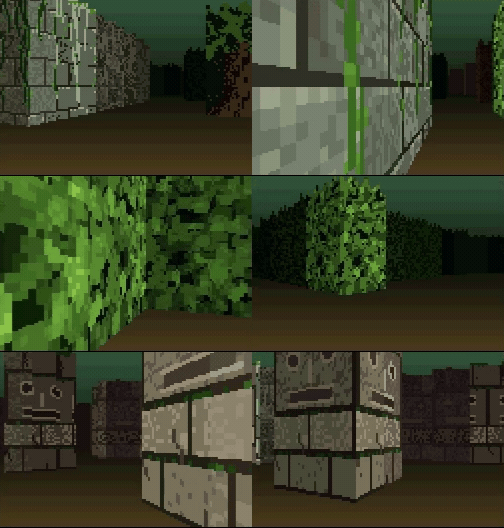
One other benefit of texel manipulation is having a cheap way to select a 'palette' despite the scene being rasterized to an 8bpp Mode 7 display area. With careful palette arrangement, it is possible for example to have vine covered stone walls & regular stone walls with just 1 texture, saving precious RAM space when the textures need to be stored there instead of ROM when the engine is moved to CD.

NATHANIEL HARRIS EST

Day 21: Accidental Fog

I was reviewing the code for my raycasting engine and looking at what would be needed to port it to CD, and I came up with an idea of manipulating bits used for texels to save precious RAM space to create "dark side" textures without requiring a separate texture. A little more testing later, and I realized I could use this technique combined with distance from the player to create a fog effect that's cheap enough to work well on even a stock SNES.

I was originally planning on including some sort of dark room mechanic like Jurassic Park for the SNES, but I was thinking it would just make everything pitch black if you don't have an item that produces light. Now I can have a lot more control over lighting in the game based on environment and the player's equipment.

NATHANIEL HARRIS EST

Day 20: First major milestone reached!

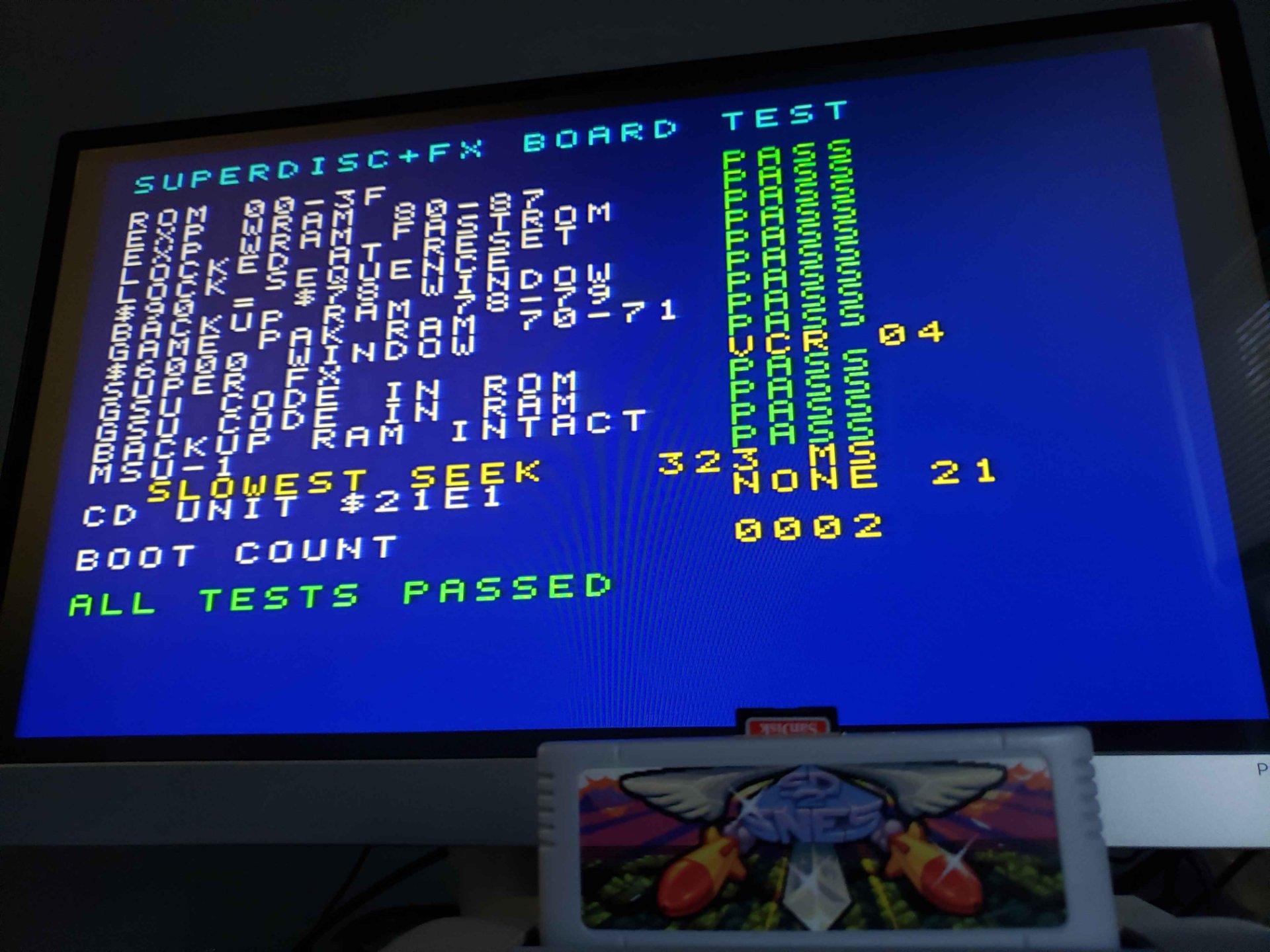
One of the major milestones for the SNES CD project was to make a build of SD2SNES that could run Nintendo PlayStation / SNES CD BIOS cartridges, and after a bunch of trial and error (and getting the IDE to build the firmware to work in the first place!) I was able to get it working on a real SNES! I can now test my new assembler for CD-based SNES games on this. This has always been important to me as I wanted to ensure my future CD games could run on existing SNES hardware, and existing emulators with MSU-1 support should be able to easily extend support for mapper and be able to play CD games with a MSU-1 build without issue.

NATHANIEL HARRIS EST

Day 17: Super Assembler, the all-in-one SNES assembler!

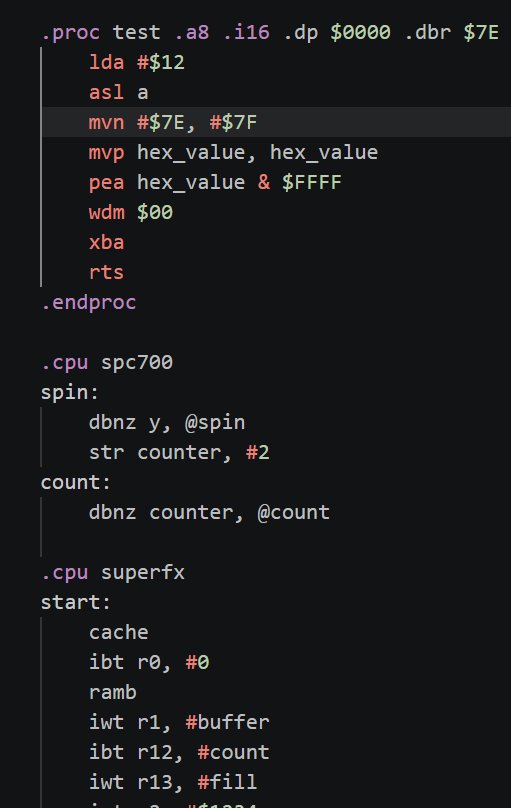
One thing I found myself wanting when developing my SNES CD programs was a 65816 assembler that could also assemble SPC-700 and SuperFX programs, particularly one with syntax similar to the CA65 assembler which I am familiar with. I now have a brand assembler that does just that, with some refinements for the 65816 processor as CA65 was meant more for 6502 programs. And most importantly, it is capable of compiling SNES programs into CD and MSU-1 files ready to be run from my new BIOS ROM.

NATHANIEL HARRIS EST

Day 11: Reinventing the Font

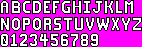
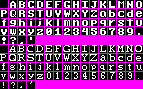
Something I hadn't yet set up but needs to be done: displaying text. An easy task, but first I needed to make some graphics for them. I've made a couple variations, a blocky style like in old 8-bit systems, and a more natural look. There's a couple ways to go about displaying text on old tile-based hardware. Either you make every character in a font its own tile and take up a fixed size, in this case 8x8 pixels, or you rasterize text to tiles which you need to do if you want variable width font and kerning. For now, I'm going with simple tile based text.